- File
- 01 · Inner Atlas
- Role
- Founder and sole engineer
- Dates
- 2025 – now
- Status
- Live on the App Store
Inner Atlas
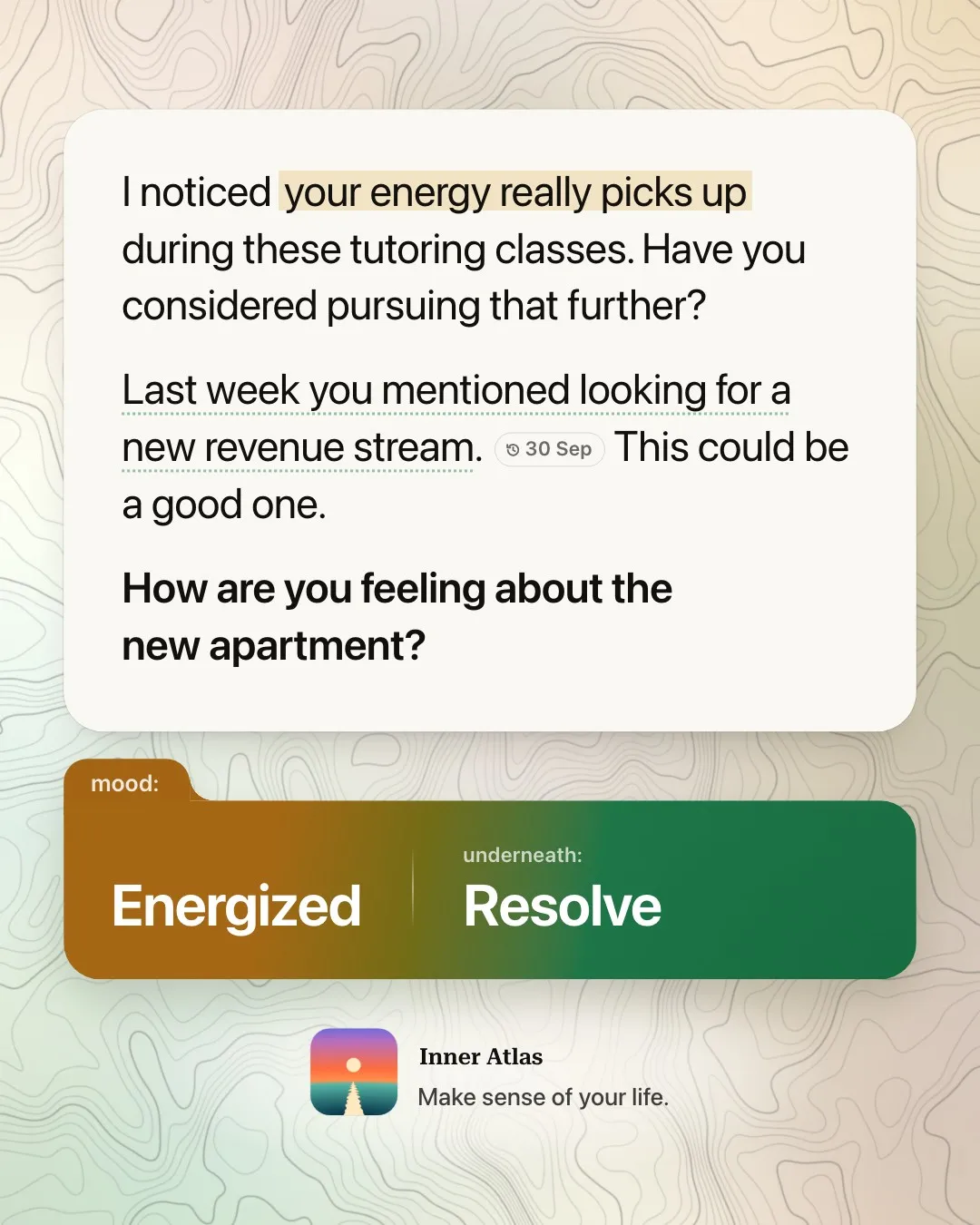
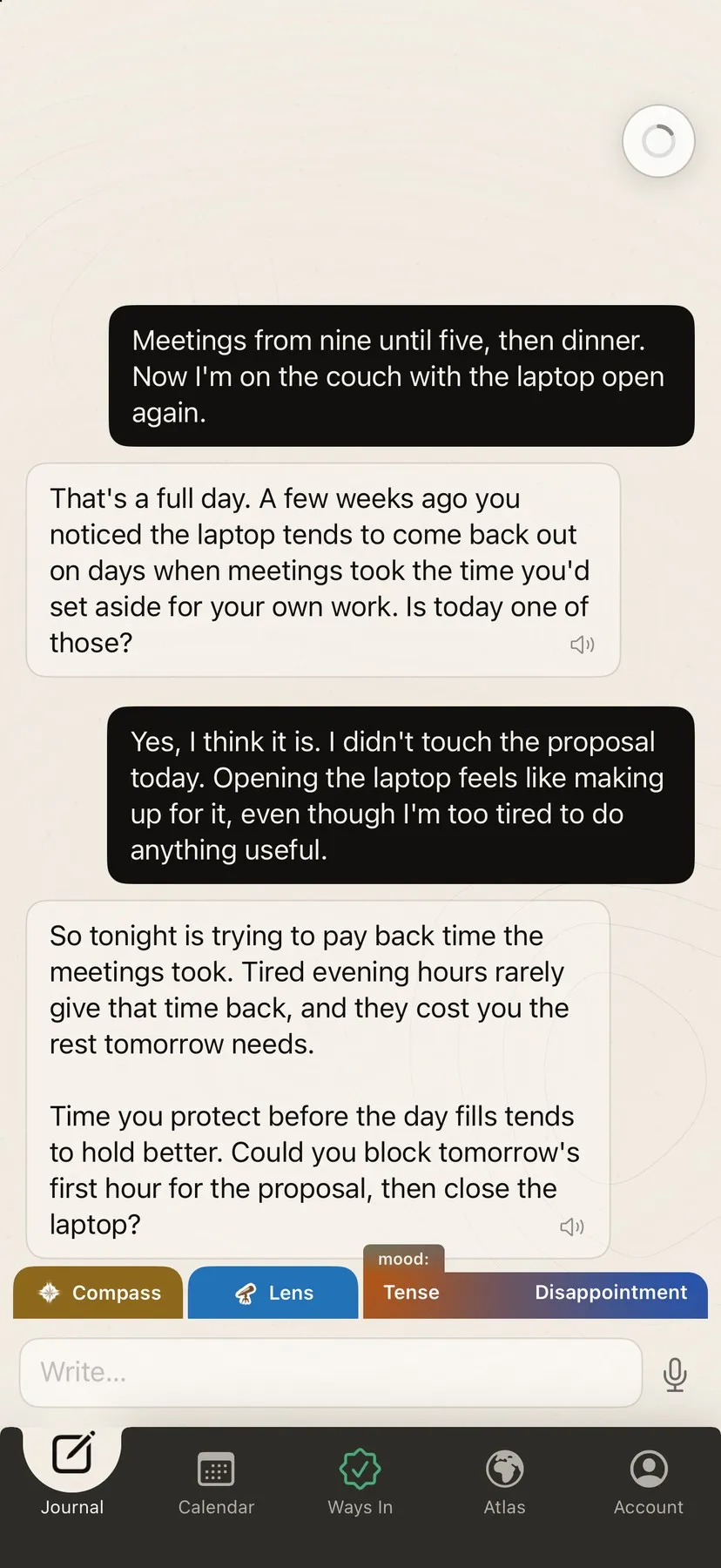
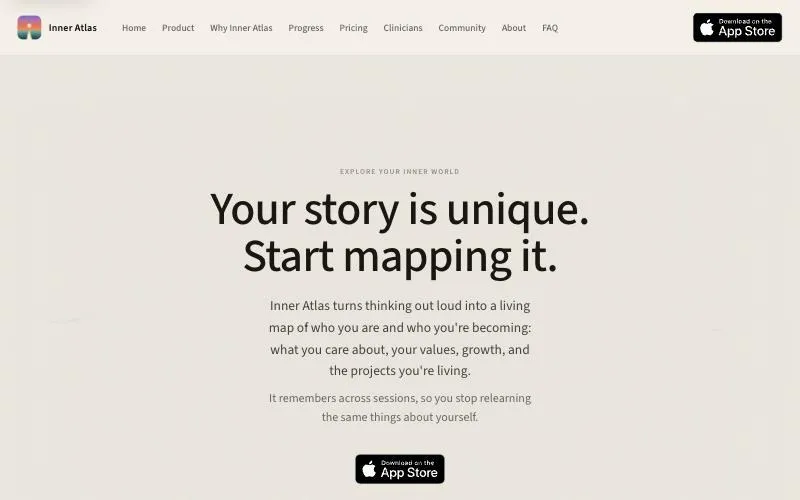
A private AI journal that remembers what you worked out and brings it back when it helps.
- Live
- on the App Store since 14 Oct 2026
- 2,650+
- commits, all mine
- 296k
- lines of Python and Swift
- 4,100+
- automated tests
- 5
- designs in 14 months
What it does
- ConversationYou write or dictate, and the AI replies. Tools appear beside it when they fit.
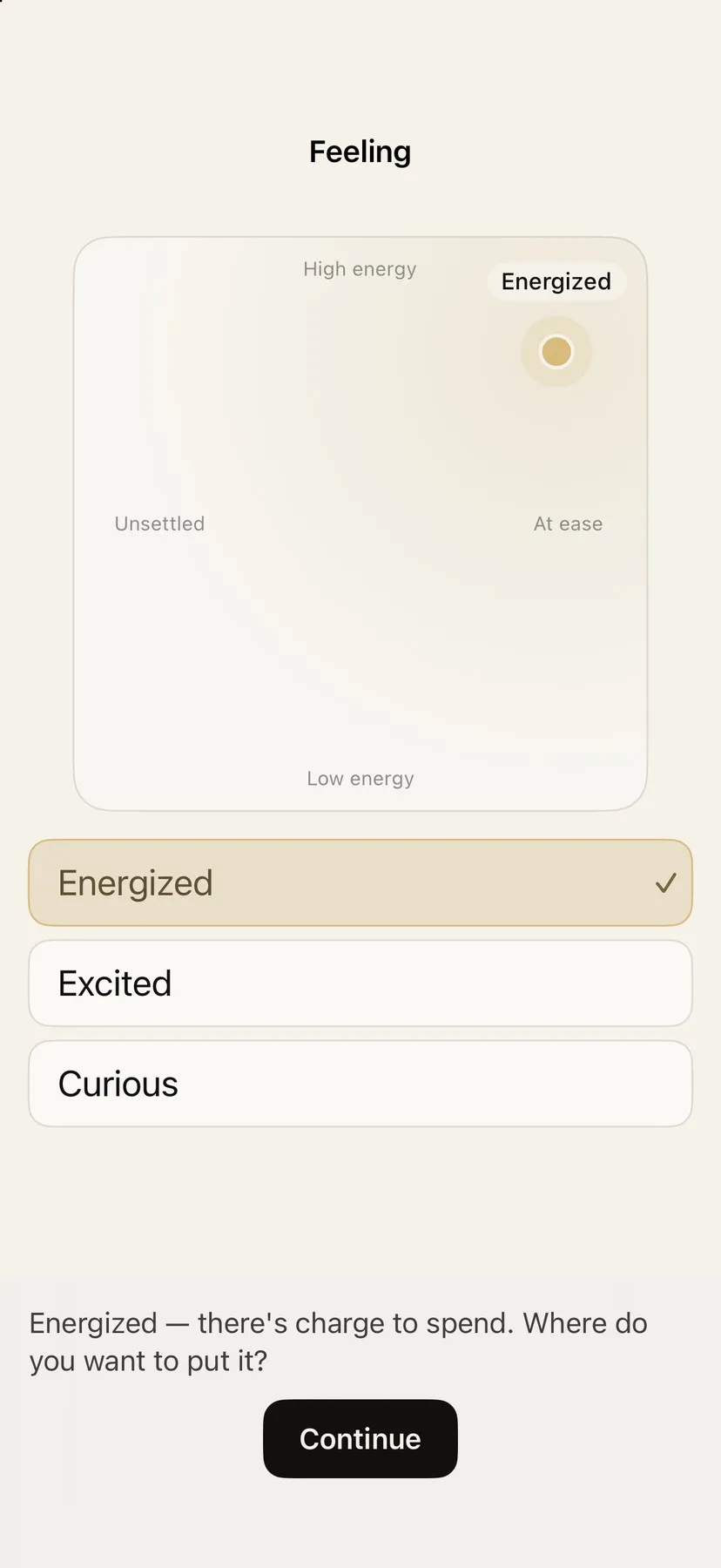
- FeelingsEach entry gets a reading of the feeling and the undercurrent beneath it.
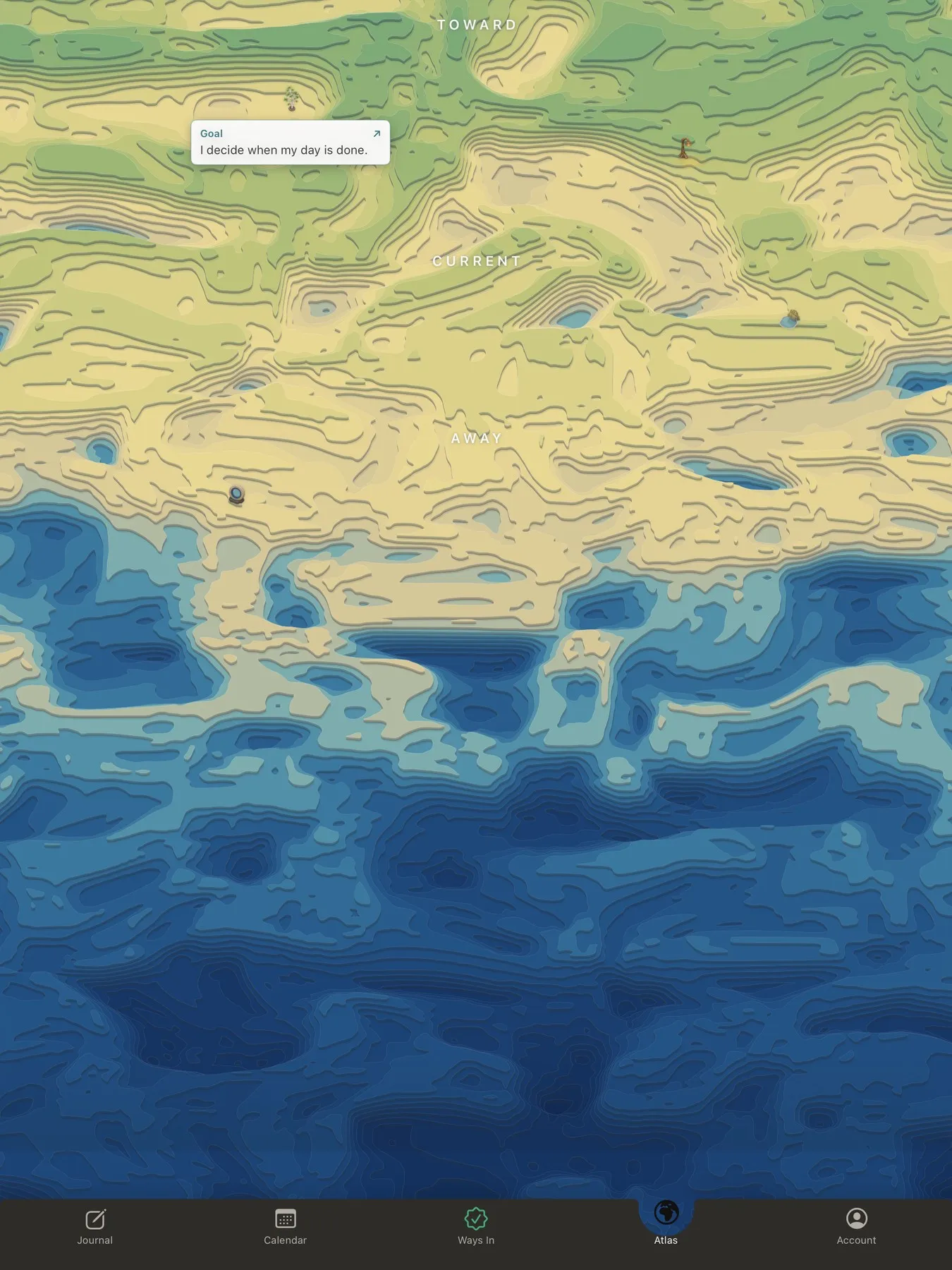
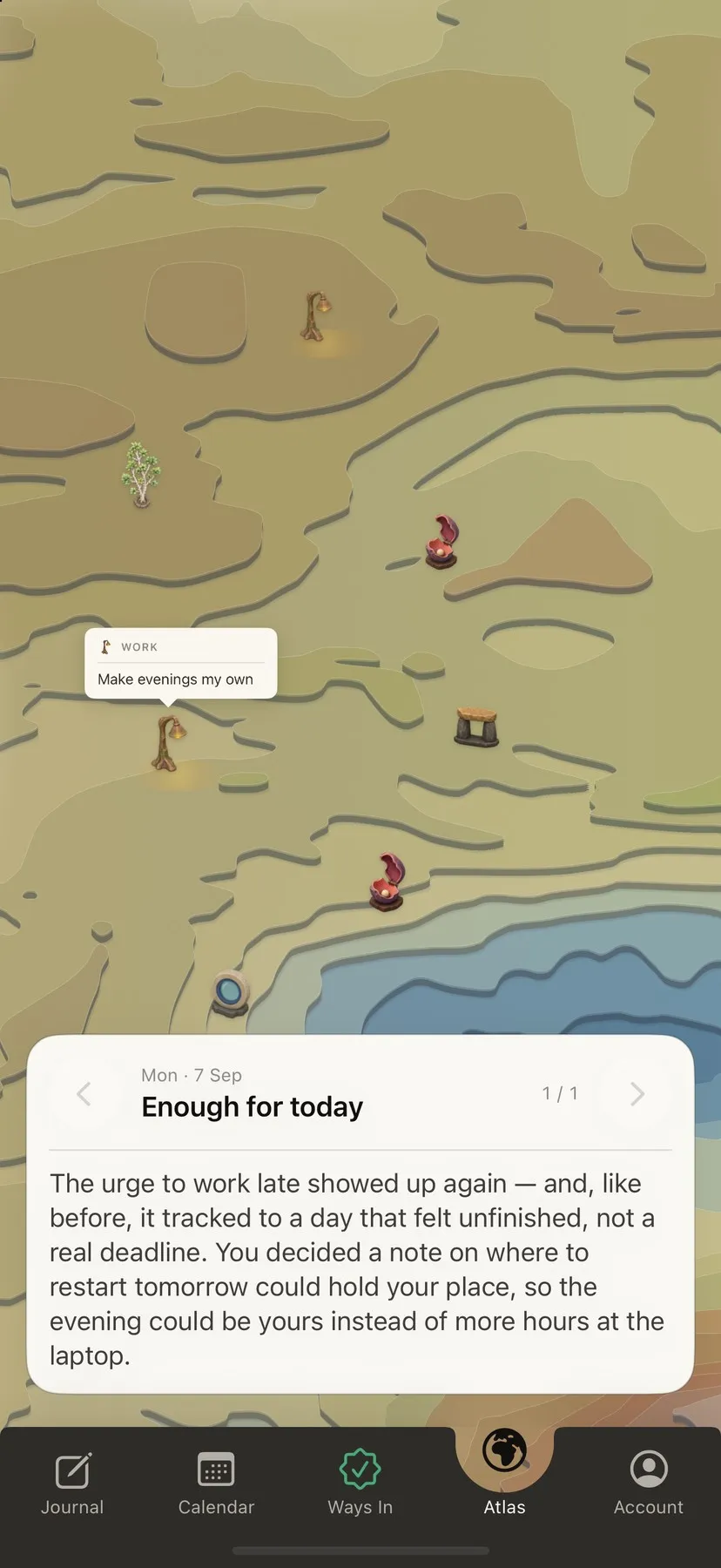
- MapsEach session becomes a Map you can return to.
- Your recordThe app proposes statements about you. Nothing joins your record until you confirm it.
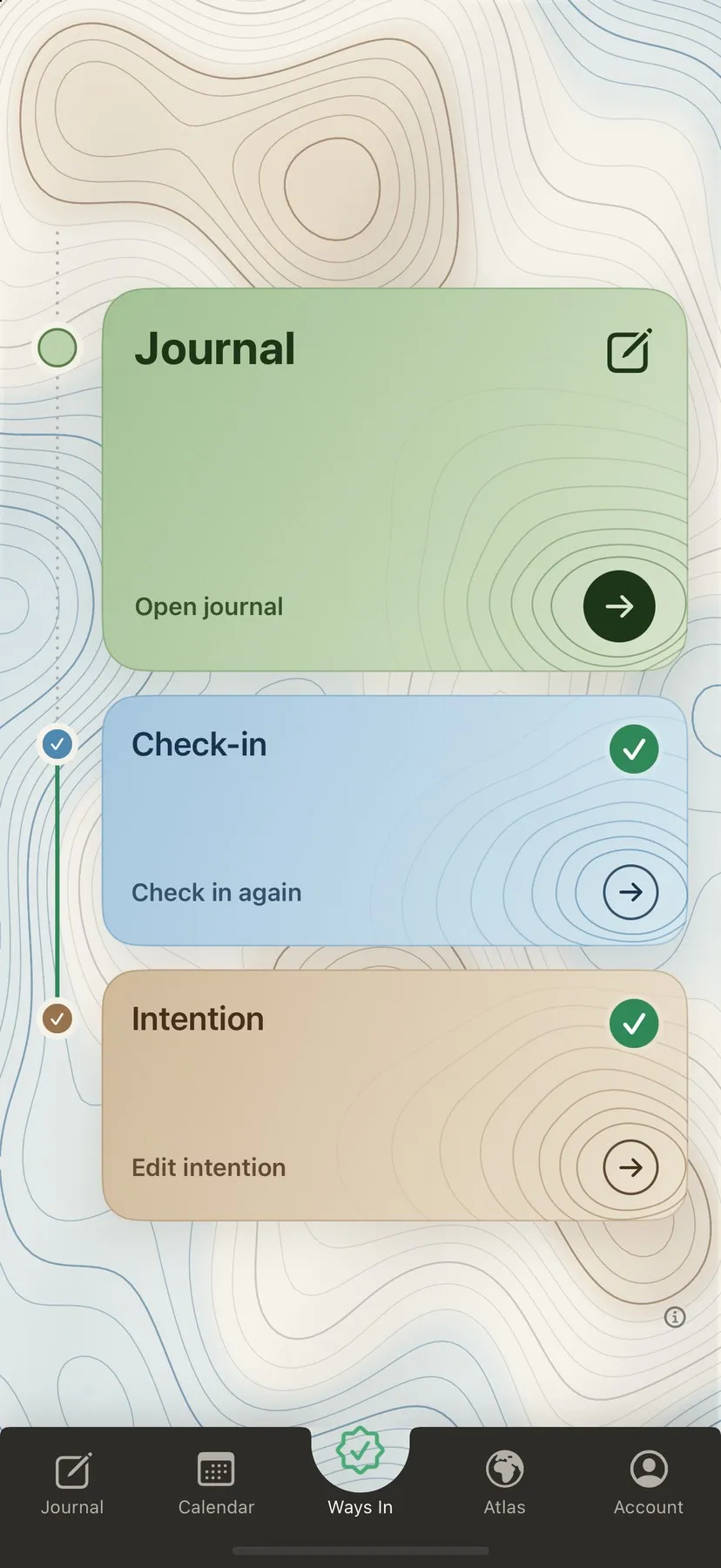
- Your dayDay planning works with your calendar.
- Your historyHandwritten journal pages and memories from other AI chatbots can come in too.
What I built
Each tier has a strict limit on what it may see and write. Chat and the tool selector run every turn, the summarizer runs once per session, and the consolidator runs across sessions.
A durable job queue, a live server-to-app event channel and push notifications.
Widgets, on-device dictation, a Screen Time shield and StoreKit subscriptions.
Encryption at rest with key rotation, full export and erasure, POPIA, consent before any AI processing, age gating and US state-by-state rules.
The safety tier always reasons at the highest level, with local helplines for every country the app sells in.
Docker deploys, database backups, Xcode Cloud builds, and an App Store listing for each English-speaking storefront.
I founded Inner Atlas (Pty) Ltd and run its pricing, website and marketing.
Decisions that mattered
Each turn searches the six stores separately. A reranker scores each store against its own calibrated threshold and cap. If one store fails, it comes back empty and the reply still goes out.
A model shown its past conclusions tends to repeat them. So the summarizer reads only the conversation, and a separate two-stage consolidator reconciles new and old memories afterwards, with the source turns as evidence.
Each model call has an explicit empty answer. The system uses no model-written confidence scores.
Stored objects reach a model as plain text with temporary aliases. Every prompt treats stored text as data, as a defence against prompt injection.
The server finishes the turn even if the phone disconnects, and a retry replays the finished turn at no cost.
How it got here
- Jul – Sep 2025The planetThe first idea: each entry would reshape a 3D planet. I wrote the spec and designed the safety layer first.
- Sep – Nov 2025The web appThe first version I built: a Next.js app on a FastAPI backend, with chat and three maps.
- Nov 2025 – Feb 2026The knowledge graphMemory as a graph of typed atoms. It showed me that model-written scores drift and that silent fallbacks hide failures.
- Mar – Jun 2026The lean runtimeReranked retrieval from each store replaced the graph. An audit then found three generations of design stacked up.
- Jul 2026 – nowThe native rebuildA SwiftUI app on a new backend. I retired the 288k-line web version. A field stays only if it steers a model or a branch in code.
How the memory works
Chat and the tool selector run on every turn. The summarizer runs once per session. The consolidator runs across sessions.
For calendar events weeks away, I tuned the threshold against those hard negatives. On every calibration run, the tuned threshold admits none of them.
Turns from an earlier session need a higher relevance score than turns from the live conversation.
A cheap model reads only the titles of new and existing memories and groups the ones that need a joint decision. It writes nothing. A strong model then takes each group in a fresh call, with only the source turns as evidence. Merged memories keep all their source turns.
Each tier names an ordered chain of models. The reranker sits behind a circuit breaker. Background jobs fail loudly and wait for a requeue, instead of retrying silently.
More screens