Start with the SASSI list
WWF-SASSI, the South African Sustainable Seafood Initiative, rates seafood green, orange or red depending on how healthy the stock is and how it’s caught. Most good restaurants and fishmongers here use it, and you can check any fish on the SASSI website or in its free app. When I plan a fish course, it starts from the green list.
Green: the fish I cook
| Fish | What it’s like |
|---|---|
| Snoek | Cape Town’s own fish: oily, full of flavour, best braaied with an apricot glaze or smoked. Strongest in winter and spring, and in some years in False Bay into January. |
| Yellowtail | Firm, meaty and mild. The summer line fish: grill it, roast it, or slice it raw for crudo. |
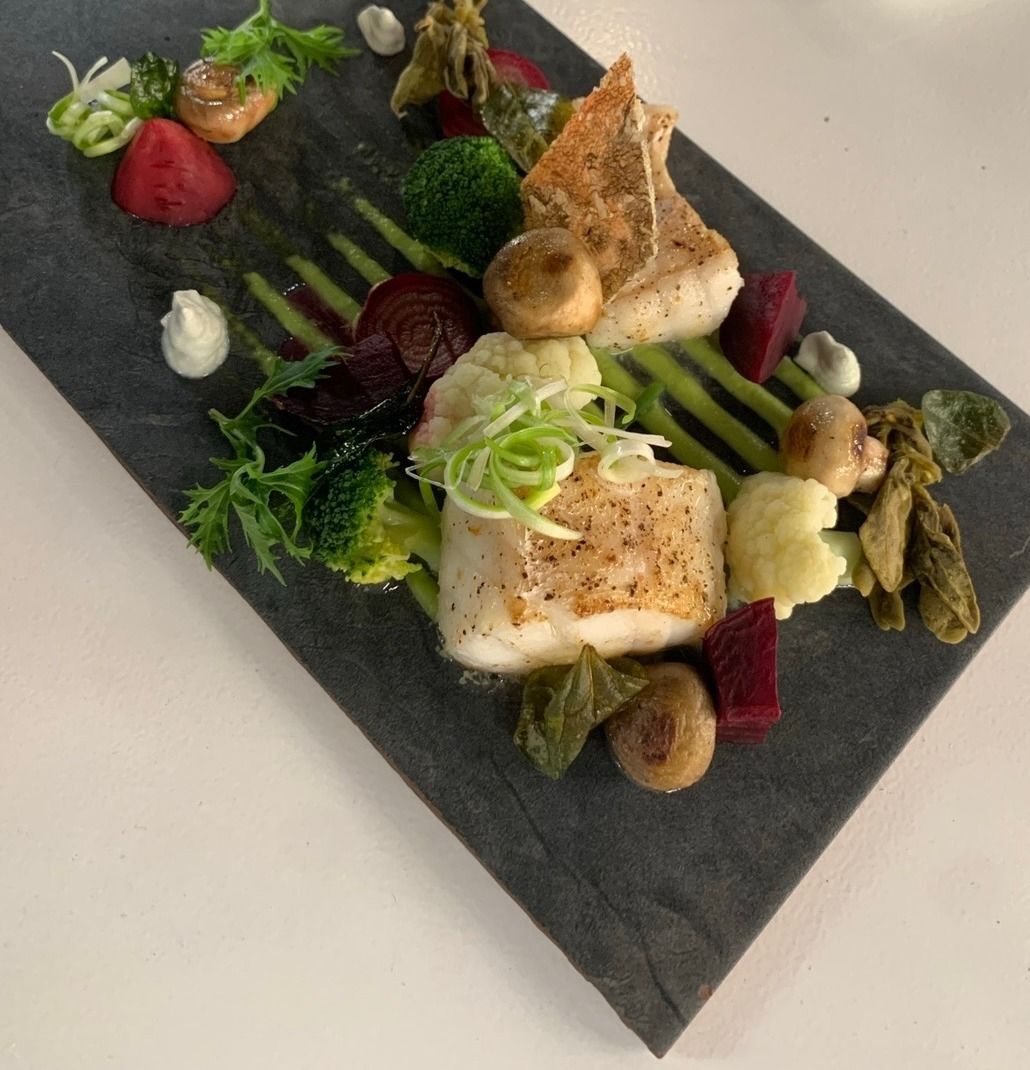
| Kingklip | Firm white fillets that hold together in a pan. Green-listed only from South Africa’s longline fishery, so ask. |
| Hake | The fish in most fish and chips here. Green when it’s MSC-certified South African or Namibian hake. |
| Chokka (calamari) | Local squid. Grill it fast and hot, or flash-fry it. |
| Black mussels and oysters | West Coast mussels, and both local rock oysters and farmed Pacific oysters, are green. |
| Yellowfin tuna | Green-listed. Good for tataki or a rare steak. |
Red: the ones I skip
| Seafood | Why |
|---|---|
| West Coast rock lobster (crayfish) | Red-listed. Recreational fishing is limited to a handful of days between December and March, with a permit and a bag limit. |
| Silver kob and geelbek | Both red-listed from the wild. You’ll still see “kob” on menus, so ask whether it’s farmed. |
| Steenbras | Red, white and West Coast steenbras are all red-listed. |
| Wild abalone (perlemoen) | Red-listed and heavily poached. Farmed abalone is green. |
Ratings from the WWF-SASSI list, checked 23 November 2026. Some species are green when farmed or caught one way and red when caught another, so the label on the counter matters.
What’s good when
- Summer (October to April): yellowtail at its best, plus tuna and chokka. This is when most visitors are here, so it’s the yellowtail menu most often.
- Winter and spring (May to September): snoek season on the West Coast. Snoek braaied with apricot jam and garlic butter is the Cape at its simplest.
- All year: hake, kingklip, mussels and farmed oysters.
Runs depend on the wind and water temperature, so the honest answer is to ask what came in this morning.
How I’d cook them
- Snoek on the braai with an apricot and garlic butter glaze, roosterkoek and salted butter on the side. It’s on my Cape braai menu.
- Kingklip or the day’s line fish roasted with charred lemon and a beurre blanc, from my summer menu.
- Yellowfin tuna as tataki with ponzu, cucumber and sesame.
- Pickled fish the Cape Malay way, with curried onions. It’s traditional at Easter, and good all year.